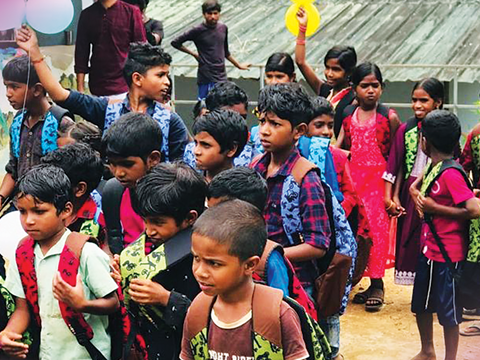

Residential Hostel (Netaji Subhash Chandra Bose Avasiya Vidyalaya Hostel)
In order to fulfill the great vision ‘Education for all,’ SSK has to set up a solution to the backwardness of the marginalised tribal community which was a challenge for the education system. Geographical barriers became a problem in the enrolment and retention of such children in some regions. To resolve this problem the residential hostels, “shelters” were formed as a special programme for students in such tribal settlements. Education and accommodation facilities were provided to children coming from such areas to bring them to the mainstream of society. There are six hostels in the five districts of Kerala. The benefits achieved were innumerable and quality education was ensured for all children in hilly/tribal areas. Their confidence was boosted up and their artistic and aesthetic qualities were discovered and developed. The support of parents from such areas was a key factor to be mentioned. This tremendous achievement was gained through a number of programmes implemented effectively. Surveys were conducted and on the basis of surveys hostel facilities were arranged for children. Beneficiaries were determined on the basis of the survey and they were provided admission in the nearby schools. The formations of Hostel Management Committee and Hostel Welfare Committee were an important step during the process. Safe accommodation, nutritious food and effective training by special tutors were the main attractions in the programme. Students were also given training in music, craft and martial arts. Physical and mental well being of children were ensured and regular medical camps were conducted per month. The participation of children in academic and non-academic activities was encouraged and the confidence level of children got increased tremendously. Children who were marginalised came forward to the mainstream of the society. Thus the vision “Education for all” became perfectly fulfilled and paved the way for the development of dreams of a number of children who otherwise would have remained in the barriers of marginalisation.
Transport and Escort Allowance
As the “Right to Education Act” States access to schools should be ensured for children living in remote and hilly areas, where schools are not available. In such situations there arises the need for transport and escort facilities, which helps children to reach schools in time. The objective was to ensure access to schools for children from remote, hilly and tribal area. Continuity in learning was ensured. Equity and equality of opportunity were the key points mentioned. The major milestones identified in fulfilling the mission were conducting surveys to identify deserving students. Such students found out were provided with conveyance facility. Children from remote habitation where public transport facilities were unavailable, were provided with this facility. Thus the barriers created through geographical diversities were eliminated and equitable education was ensured for all children. All children between the age of 6 and 14 were brought to the main stream of education through proper schooling.